Programs & classes

From early years
to primary confidence.

Wonder Bees in Gwalior runs Early Years programs for PG and Nursery, primary classes from Class 1 through Class 5, and Day Care support alongside them.

Ask about admissions

WhatsApp admissions

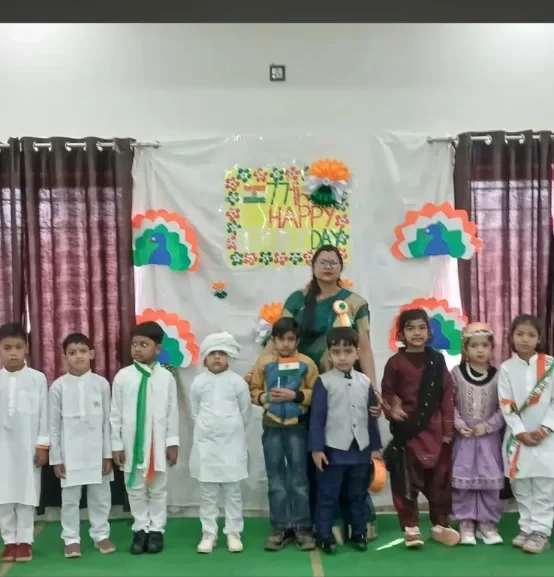
Wonder Bees children in festive dress standing with a teacher in front of an Independence Day banner in the school hall
Early Years

A comfortable start to learning

The first two stages are less about content and more about a child becoming someone who can learn in a group — comfortable, listening, and willing to try.

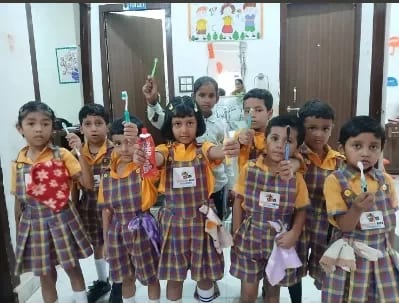
Young children in Wonder Bees uniform holding craft items they have made, standing together in the classroom doorway
Early Years

PG / Playgroup

For most children this is the first time they spend part of a day in a room of other children, with an adult who is not a parent. That transition is the work.

  • Becoming comfortable with a routine that repeats
  • Listening, responding and being understood
  • Sensory exploration and hands-on materials
  • Movement, play and using the whole room
  • Interacting with other children
  • Small pieces of everyday independence
Ask about Playgroup
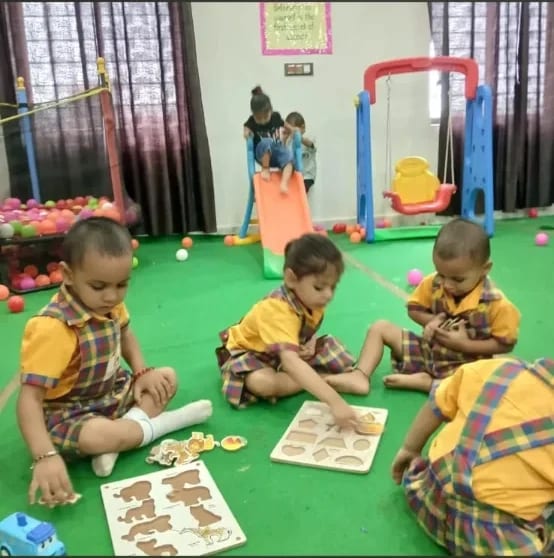
Children seated on the floor of the activity room fitting shapes into wooden puzzle boards, with a slide and ball pit behind them
Early Years

Nursery

Language does most of the heavy lifting here. Children who can say what they mean find the rest of school considerably easier, so a lot of the day is spent talking.

  • Language, vocabulary and communication
  • Early understanding of number, shape and colour
  • Observation and curiosity
  • Storytelling and listening
  • Creative and craft activity
  • Participation and classroom confidence
Ask about Nursery
Primary School

Building stronger learning foundations

Classes 1 to 5 run on the same campus and the same approach. What changes across them is how much a child is expected to carry on their own.

Classes 1 & 2

Foundation primary

Written work becomes a daily habit rather than an occasional activity. Learning increasingly includes reading and language foundations, writing practice and basic number concepts, with the classroom habits that make them possible.

  • Reading & language
  • Writing practice
  • Number concepts
  • Classroom habits
  • Participation
Enquire for Classes 1–2
Classes 3 & 4

Developing primary

The work gets longer and the questions get harder. Children read for meaning rather than decoding, write in their own words, and are asked how they reached an answer as often as what the answer was.

  • Reading comprehension
  • Written expression
  • Reasoning
  • Problem solving
  • Asking questions
Enquire for Classes 3–4
Class 5

Growing independence

The last primary year leans on habits built earlier. Children manage more of their own work, build wider general knowledge, and take responsibility for what they produce and hand in.

  • Independent study
  • Wider knowledge
  • Reasoning
  • Written & verbal expression
  • Responsibility
Enquire for Class 5
How learning grows

How learning changes as children grow

  1. PG & Nursery

    Comfort & participation

    Getting used to a room full of other children, a routine that repeats, and an adult who is not a parent.

  2. PG & Nursery

    Communication & first concepts

    Talking, listening, naming things, and meeting early ideas about letters, numbers, shape and colour.

  3. Classes 1 & 2

    Reading, writing & number confidence

    Written work becomes a daily habit. Children read more on their own and start finishing a task without prompting.

  4. Classes 3 & 4

    Reasoning & expression

    Longer pieces of work, explaining how an answer was reached, and asking the follow-up question.

  5. Class 5

    Increasing independence

    Managing their own work, building wider general knowledge, and taking responsibility for what they hand in.

These descriptions explain the broad development of learning across the stages. They are not a statement of an external curriculum standard.

In practice

More than sitting and listening

What a day is actually made of, across the Early Years rooms and the primary classes.

The classroom

See learning in the classroom

Photographs taken at Wonder Bees.

See school life
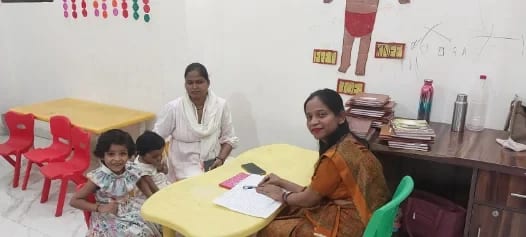
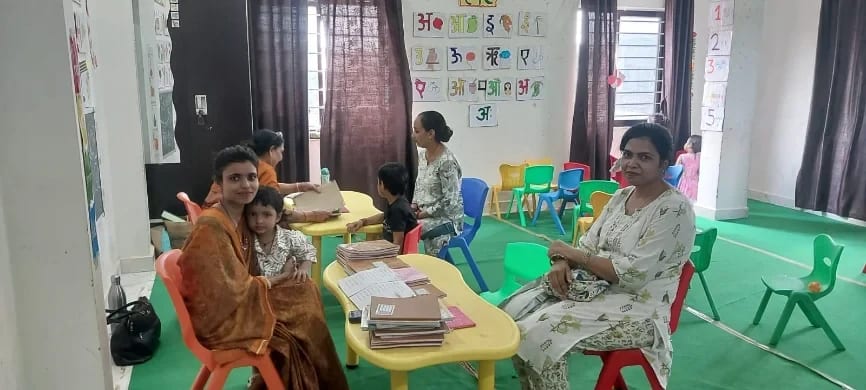
A classroom with Hindi alphabet and number charts on the wall, low tables stacked with notebooks, and teachers seated with parents and children
Notebooks, charts and classroom work
A teacher writing at a desk with registers and notebooks stacked beside her while two children sit at a low table
Teacher-guided work
A group of children in Wonder Bees uniform standing together with a teacher inside the classroom
In class together
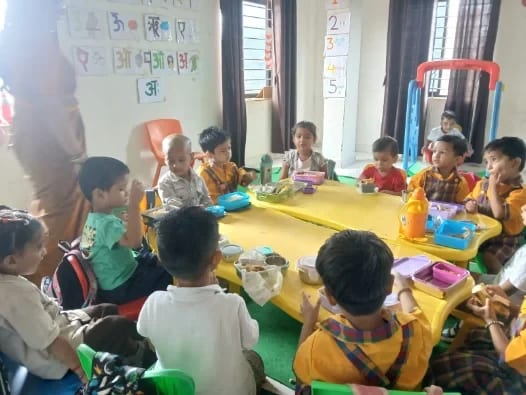
Children seated around a table with tiffin boxes, alphabet and number charts on the wall behind
The everyday routine
Additional service

Day Care alongside the school day

Day Care is available as an additional service for families who need care beyond regular learning hours. It is not an academic class, and it runs alongside the programs above rather than replacing any of them.

At a glance

Programs at a glance

Wonder Bees programs, the stage each belongs to, what it supports and where to read more
ProgramStageWhat it supportsNext
ProgramPG / PlaygroupStageEarly YearsWhat it supportsSettling in, routines, communication and playNextSee Playgroup
ProgramNurseryStageEarly YearsWhat it supportsLanguage, early concepts, curiosity and participationNextSee Nursery
ProgramClasses 1 & 2StagePrimaryWhat it supportsReading, writing and number work as daily habitsNextSee Classes 1 & 2
ProgramClasses 3 & 4StagePrimaryWhat it supportsComprehension, reasoning and clearer written expressionNextSee Classes 3 & 4
ProgramClass 5StagePrimaryWhat it supportsIndependent work, wider knowledge and responsibilityNextSee Class 5
ProgramDay CareStageAdditional serviceWhat it supportsCare alongside regular learning hoursNextExplore Day Care
Not sure where to start

Not sure which class or program fits?

Share your child's age and current class with the school team. They can explain the options available and help you understand the appropriate starting point before admission — which is usually a much shorter conversation than parents expect.

WhatsApp admissions
Questions

Frequently asked questions

PG / Playgroup and Nursery in the Early Years, and Classes 1 to 5 in the primary school. Day Care is available alongside these as an additional service.

Admission enquiries open

Find the right starting point for your child

Visit Wonder Bees, see the classrooms and speak with the team about PG, Nursery or Classes 1 to 5.

No obligation — a visit is simply a chance to see the school and ask questions.

CallWhatsApp